

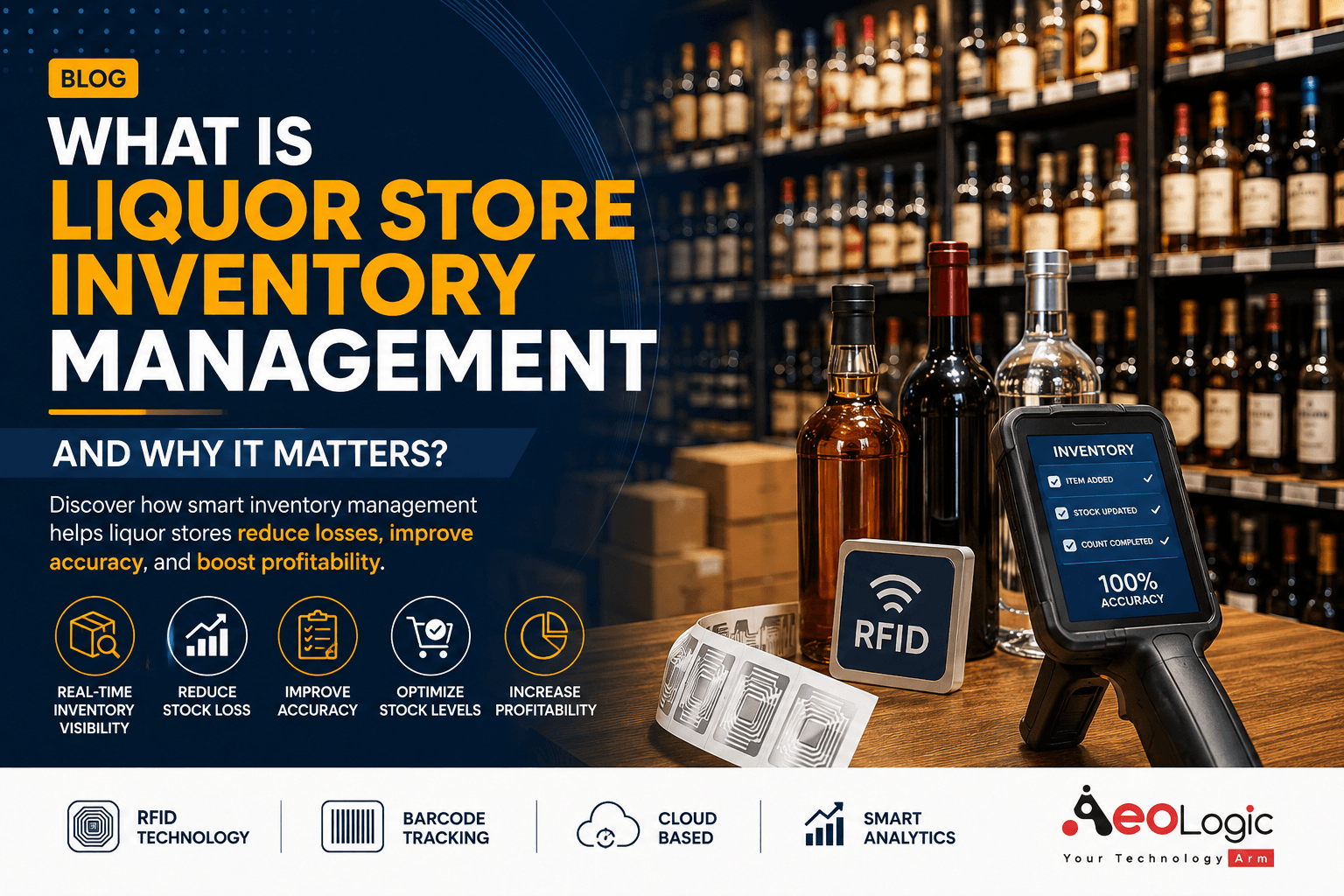
Managing inventory is one of the most critical aspects of running a successful liquor store. With hundreds or even thousands of SKUs across wines, spirits, beers, and premium alcoholic beverages, maintaining accurate inventory levels can be challenging. Overstocking ties up capital, while stockouts lead to lost sales and dissatisfied customers.
This is where liquor store inventory management becomes essential. It enables retailers to track stock levels, monitor product movement, prevent losses, and ensure the right products are available at the right time. As competition in the alcohol retail industry continues to grow, effective inventory management has become a key factor in improving profitability and operational efficiency.
In this article, we’ll explore what liquor store inventory management is, why it matters, the common challenges faced by retailers, and how modern technologies such as RFID, barcode scanning, and inventory automation are transforming liquor store operations.
What Is Liquor Store Inventory Management?
Liquor store inventory management is the process of tracking, controlling, organizing, and optimizing alcoholic beverage inventory throughout the retail supply chain. It involves monitoring inventory levels from the moment products arrive at the store until they are sold to customers.
The primary goal is to ensure inventory accuracy while minimizing waste, theft, stock shortages, and excess inventory.
A comprehensive liquor inventory management system helps retailers:
- Track inventory in real time
- Monitor product sales and stock movement
- Manage product replenishment
- Reduce inventory shrinkage
- Improve stock visibility
- Optimize ordering decisions
- Ensure compliance with alcohol regulations
Whether managing a single liquor store or multiple retail locations, inventory management provides the visibility needed to make informed business decisions.
Why Liquor Store Inventory Management Matters
1. Prevents Stockouts and Lost Sales
Customers expect their preferred brands and products to be available whenever they visit a liquor store. If popular items are consistently out of stock, customers may switch to competitors.
An effective inventory management system helps retailers monitor inventory levels and receive alerts when stock falls below predefined thresholds. This allows timely replenishment and ensures high-demand products remain available.
2. Reduces Excess Inventory
Overstocking is a common issue in liquor retail. While maintaining sufficient inventory is important, excessive stock ties up valuable capital and storage space.
Inventory management systems provide demand forecasting and sales analytics that help retailers purchase inventory based on actual consumption patterns. This improves cash flow and reduces carrying costs.
3. Improves Inventory Accuracy
Manual inventory counting often results in errors, especially in stores carrying thousands of products.
Inventory management solutions automate tracking processes and provide accurate stock visibility. Retailers can quickly identify discrepancies and maintain accurate inventory records, improving operational efficiency.
4. Minimizes Inventory Shrinkage
Inventory shrinkage caused by theft, fraud, breakage, and administrative errors can significantly impact profitability.
By implementing automated inventory tracking technologies such as RFID and barcode systems, liquor stores can monitor product movement more effectively and identify losses before they become costly problems.
5. Enhances Customer Satisfaction
Accurate inventory management ensures products are available when customers need them. Faster stock replenishment and improved product availability contribute to a better shopping experience, increasing customer loyalty and repeat business.
6. Supports Better Business Decisions
Inventory data provides valuable insights into:
- Fast-moving products
- Slow-moving inventory
- Seasonal demand trends
- Supplier performance
- Product profitability
These insights help retailers optimize purchasing decisions and maximize revenue.
Common Inventory Challenges Faced by Liquor Stores
Despite its importance, many liquor stores still rely on spreadsheets or manual processes. This often leads to operational inefficiencies and inventory issues.
Inventory Inaccuracies
Manual stock counting can result in discrepancies between actual inventory and recorded inventory levels.
Theft and Shrinkage
High-value alcoholic beverages are frequent targets for theft, making inventory control more challenging.
Managing Large Product Catalogs
Liquor stores often carry a wide variety of products, including:
- Wines
- Spirits
- Beer
- Imported beverages
- Premium liquor collections
Tracking thousands of SKUs manually can be time-consuming and error-prone.
Demand Fluctuations
Demand for alcohol products often varies due to holidays, festivals, special events, and seasonal trends.
Multi-Store Inventory Visibility
Retailers operating multiple locations need centralized visibility to manage inventory efficiently across all stores.
Key Features of an Effective Liquor Store Inventory Management System
A modern inventory management solution should include the following features:
Real-Time Inventory Tracking
Provides instant visibility into stock levels across the store.
Automated Reordering
Generates purchase recommendations based on inventory thresholds and sales trends.
Barcode and RFID Integration
Improves inventory accuracy while reducing manual labor.
Sales and Inventory Analytics
Provides actionable insights for inventory optimization.
Multi-Location Inventory Management
Enables centralized monitoring of inventory across multiple stores.
Mobile Inventory Auditing
Allows staff to perform inventory counts using handheld devices.
Inventory Alerts and Notifications
Notifies managers about low stock levels, discrepancies, and unusual inventory activity.
How RFID Technology Is Transforming Liquor Store Inventory Management
RFID (Radio Frequency Identification) technology is rapidly becoming a game-changer for liquor retailers.
Unlike traditional barcode systems, RFID allows multiple products to be scanned simultaneously without requiring direct line-of-sight.
Benefits of RFID-based liquor inventory management include:
- Real-time inventory visibility
- Faster stock counting
- Improved inventory accuracy
- Reduced shrinkage and theft
- Automated inventory audits
- Better product traceability
Liquor retailers using RFID can complete inventory counts in minutes rather than hours, significantly reducing labor costs and improving operational efficiency.
Best Practices for Liquor Store Inventory Management
To maximize inventory performance, liquor store owners should follow these best practices:
Conduct Regular Inventory Audits
Routine audits help identify discrepancies and maintain accurate records.
Analyze Sales Trends
Use historical sales data to forecast future demand and optimize purchasing decisions.
Automate Inventory Tracking
Implement barcode or RFID technology to improve visibility and reduce manual errors.
Monitor Inventory Turnover
Track how quickly products sell to identify high-performing and slow-moving inventory.
Establish Reorder Points
Set minimum inventory thresholds to prevent stockouts.
Train Employees
Ensure staff follow standardized inventory procedures and best practices.
Future of Liquor Store Inventory Management
The future of liquor inventory management lies in automation and data-driven decision-making. Emerging technologies such as RFID, IoT, artificial intelligence, and cloud-based inventory platforms are enabling retailers to gain unprecedented visibility and control over their inventory.
These technologies help businesses:
- Improve inventory accuracy
- Reduce operational costs
- Increase profitability
- Enhance customer experiences
- Scale efficiently across multiple locations
Retailers that embrace inventory automation will be better positioned to compete in an increasingly dynamic and customer-focused marketplace.
Conclusion
Liquor store inventory management is much more than simply tracking stock levels. It is a strategic business function that directly impacts profitability, customer satisfaction, and operational efficiency.
By implementing modern inventory management solutions and leveraging technologies such as RFID and barcode tracking, liquor retailers can reduce inventory losses, improve stock accuracy, streamline operations, and make smarter business decisions.
As the alcohol retail industry continues to evolve, investing in efficient inventory management systems is no longer optional—it is essential for long-term success and sustainable growth.
Frequently Asked Questions
1. What is liquor store inventory management?
Liquor store inventory management is the process of tracking, organizing, monitoring, and controlling alcoholic beverage inventory throughout the retail lifecycle. It helps retailers maintain accurate stock levels, prevent inventory shortages, reduce excess stock, and improve overall operational efficiency. A well-managed inventory system ensures that popular products remain available while minimizing losses caused by theft, spoilage, or administrative errors. Modern inventory management solutions often integrate barcode scanning, RFID technology, sales analytics, and automated replenishment tools to provide real-time visibility into inventory performance.
2. Why is inventory management important for liquor stores?
Inventory management is crucial because it directly impacts profitability, customer satisfaction, and operational efficiency. Without proper inventory control, liquor stores may experience stockouts, overstocking, inventory shrinkage, and inaccurate stock records. Effective inventory management helps retailers maintain optimal stock levels, improve cash flow, reduce carrying costs, and ensure customers can consistently find the products they want. It also enables better decision-making through inventory analytics and sales forecasting.
3. What are the biggest inventory challenges faced by liquor stores?
Liquor stores commonly face challenges such as inventory inaccuracies, theft, shrinkage, overstocking, stockouts, seasonal demand fluctuations, and managing large product catalogs. Tracking thousands of SKUs manually can be time-consuming and prone to errors. Additionally, premium liquor products often require tighter inventory controls due to their higher value. Implementing automated inventory tracking systems can significantly reduce these challenges while improving accuracy and visibility.
4. How can liquor stores reduce inventory shrinkage?
Inventory shrinkage can be reduced through a combination of technology, employee training, and regular inventory audits. Liquor stores should implement barcode or RFID-based inventory tracking systems, conduct routine stock counts, monitor inventory discrepancies, and establish strict inventory handling procedures. Security measures such as surveillance systems and restricted access to high-value products can also help minimize theft and unauthorized inventory movement. Real-time inventory monitoring allows businesses to identify and address issues before they lead to significant losses.
5. What is the difference between barcode and RFID inventory management?
Barcode inventory management requires each product label to be scanned individually using a barcode scanner. While effective and affordable, barcode systems can be labor-intensive for large inventories. RFID (Radio Frequency Identification), on the other hand, uses radio waves to identify and track tagged products automatically. RFID can scan multiple items simultaneously without requiring direct line-of-sight, making inventory counts much faster and more accurate. For liquor stores with large inventories and high-value products, RFID offers superior efficiency and inventory visibility.
6. How does RFID improve liquor store inventory management?
RFID technology enhances inventory management by providing real-time visibility into inventory movement and stock levels. It enables rapid inventory audits, improves inventory accuracy, reduces manual labor, and helps prevent theft and shrinkage. Liquor store staff can quickly locate products, track inventory across multiple locations, and receive instant updates on stock availability. RFID also helps retailers improve replenishment processes and maintain optimal inventory levels, ultimately increasing operational efficiency and profitability.
7. What features should a liquor store inventory management system include?
A robust liquor store inventory management system should include real-time inventory tracking, automated stock replenishment, barcode or RFID integration, sales analytics, demand forecasting, inventory alerts, supplier management, and multi-location inventory visibility. Additional features such as mobile inventory auditing, cloud-based access, reporting dashboards, and integration with point-of-sale (POS) systems can further improve inventory control and decision-making capabilities.
8. How often should liquor stores perform inventory audits?
The frequency of inventory audits depends on store size, inventory volume, and business requirements. Most liquor retailers perform monthly or quarterly physical inventory counts, while high-volume stores may conduct cycle counts weekly or even daily for premium products. Regular audits help identify discrepancies, maintain accurate inventory records, detect theft, and improve inventory accountability. Stores using RFID technology can perform inventory audits more frequently because the process is significantly faster than manual counting.
9. How does inventory management improve liquor store profitability?
Effective inventory management improves profitability by reducing unnecessary inventory costs, minimizing stockouts, lowering shrinkage, and optimizing purchasing decisions. Retailers can better understand customer demand, maintain ideal stock levels, and avoid tying up capital in slow-moving products. Improved inventory accuracy also reduces labor costs associated with manual stock counts and inventory corrections. By ensuring products are available when customers need them, liquor stores can increase sales and customer loyalty.
10. Can inventory management software support multi-location liquor stores?
Yes, modern inventory management software is specifically designed to support businesses operating multiple liquor store locations. These systems provide centralized visibility into inventory levels across all stores, allowing managers to track stock movement, transfer inventory between locations, and monitor sales performance from a single dashboard. Multi-location inventory management improves operational control, enhances stock allocation, reduces inventory imbalances, and helps retailers maintain consistent product availability across their entire retail network.
